
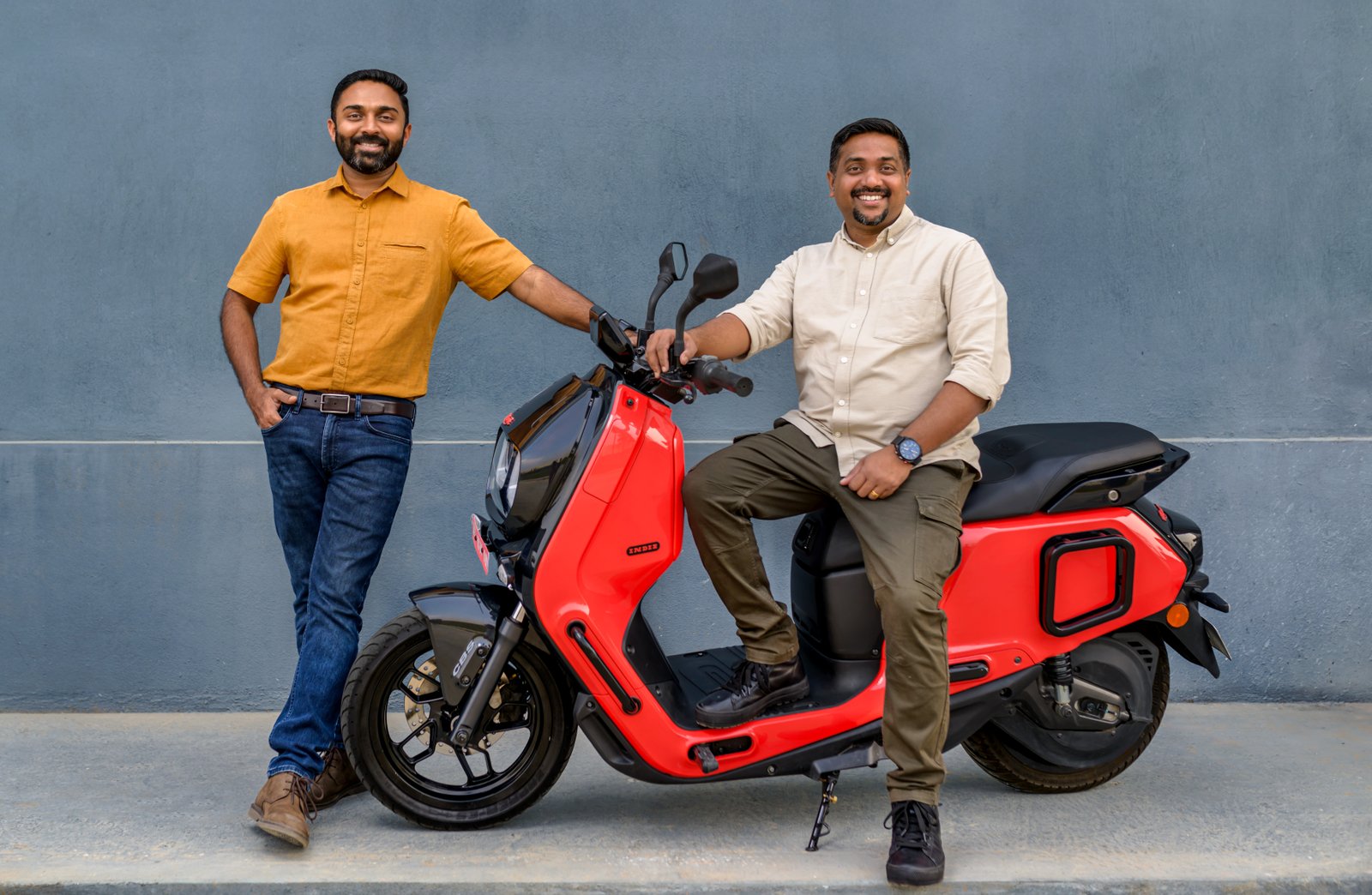
By Abhisekh Shah
When Elev8 led the $120 million Series C in River Mobility, the most common question we received was: why now? In a crowded market, against a macro backdrop of conflict-driven inflation and a weakening rupee?
The honest answer: because of those headwinds, not in spite of them.
India imports 88.6% of the crude oil it consumes. That single number is the most consequential vulnerability in our economy. When global oil markets are stable, it is an abstraction. When the Strait of Hormuz comes under threat, as it did this March, when our crude basket spiked above $150 a barrel, it becomes an emergency. India’s energy security depends on geopolitics it cannot control. Electrification of our transport fleet is the only credible long-term answer.
It is also about quality of life. India is home to some of the most polluted cities in the world, and transport contributes a meaningful share of urban particulate matter. That cost is not just measured in AQI, it is measured in hospital admissions, lost workdays, and shortened lives. The EV transition is not a luxury India can afford to pursue slowly.
And it is already underway, faster than most realise. India clocked 2.55 million EV sales in FY26 — a 25% jump — with electric two-wheelers crossing 1.4 million units and penetration touching 8.6%.
Within that transition, we backed River because it has everything a growth-stage investor looks for at a category inflection.
Leadership is the first reason. CEO Aravind Mani and CPO Vipin George bring complementary strengths — strategy and operations from Ultraviolette, industrial design from Ultraviolette and Honda. They are supported by a bench drawn from Ather, Bosch, Hero MotoCorp, Royal Enfield, TVS, and Maruti Suzuki, many with 10 to 20 years in Indian automotive. This is not a founder-led startup learning manufacturing on the job. It is a platform built by people who have already done it.
Product quality, vision, and differentiation is the second. The River Indie is built on a deliberately contrarian positioning: utility-first, in a category obsessed with software dashboards and price wars. Best-in-segment storage at 55 litres versus Ather’s 22L and Ola’s 32L. 14-inch alloy wheels, hill-hold assist, crash guards, CBS discs. The design has won two Red Dot Awards — Concept Design in 2024 and Product Design in 2025 — making River the only Indian two-wheeler brand to claim both. These are not vanity citations. They reflect a product engineered for the rider who actually uses a scooter for work, family, and load — which is most of India.
The consumer response validates the thesis. River ranks in the top seven E2W OEMs nationally despite a deliberately limited retail footprint — a ratio of brand pull to distribution that almost no incumbent matches. It is #2 in Kochi and consistently #3 to #5 across several southern cities, holding its own against far better-capitalised rivals. Revenue scaled from Rs 104 crore in FY25 to Rs 437 crore in FY26, units from 6,100 to 27,000, and monthly sales are up nearly 3x in the last twelve months. This is the shape of a brand earning its way into the market, not buying its way in.
The cap table reinforces the moat. Yamaha is not only an investor but a strategic manufacturing partner and operational advisor, materially de-risking new launches. Mitsui, Marubeni, Toyota Ventures, Al-Futtaim, and Lowercarbon round out a roster that delivers supply chain access, and balance-sheet credibility.
India’s electrification is no longer a question of whether — only of when and who. Five years from now, this market will have consolidated to a handful of OEMs. We have made our bet on which one.